
Fiber Optic Pressure Guidewire
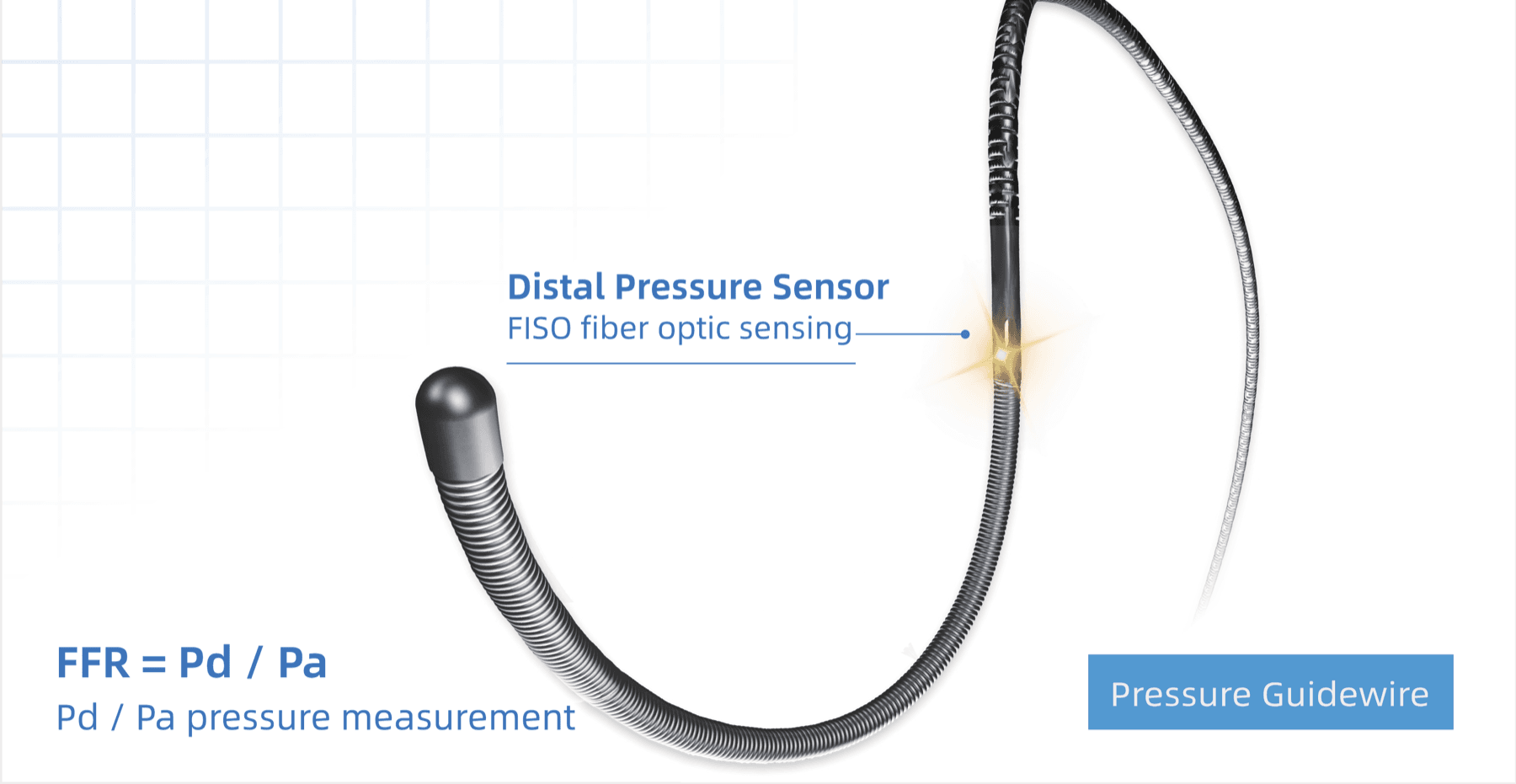
FFR Optical Pressure Guidewire
A coronary guidewire integrating miniature fiber-optic pressure sensing for distal/proximal pressure relationship measurement and FFR functional assessment.
Specifications
Core Specifications
Key product parameters and boundaries commonly needed in distributor and clinical communication.
Overview
At a Glance
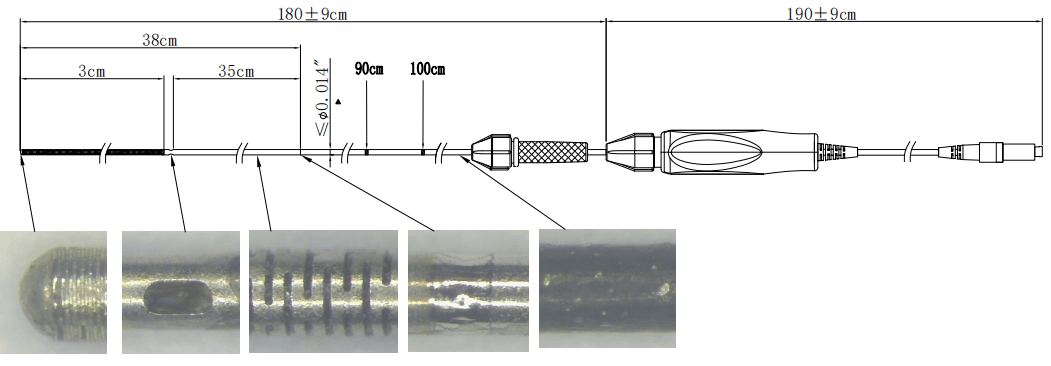
The product consists of a pressure guidewire, torque handle, and handle fiber-cable assembly. The length marks in the figure clarify the distal flexible section, access reference markers, and connection lengths.
Distal Structure
Distal Structure
The distal structure is organized around access, radiopaque identification, and pressure capture. The tip includes core wire, stranded wire, and spring; the sensor is 3 cm from the distal end and the observation window is located at the spring-tip starting position.
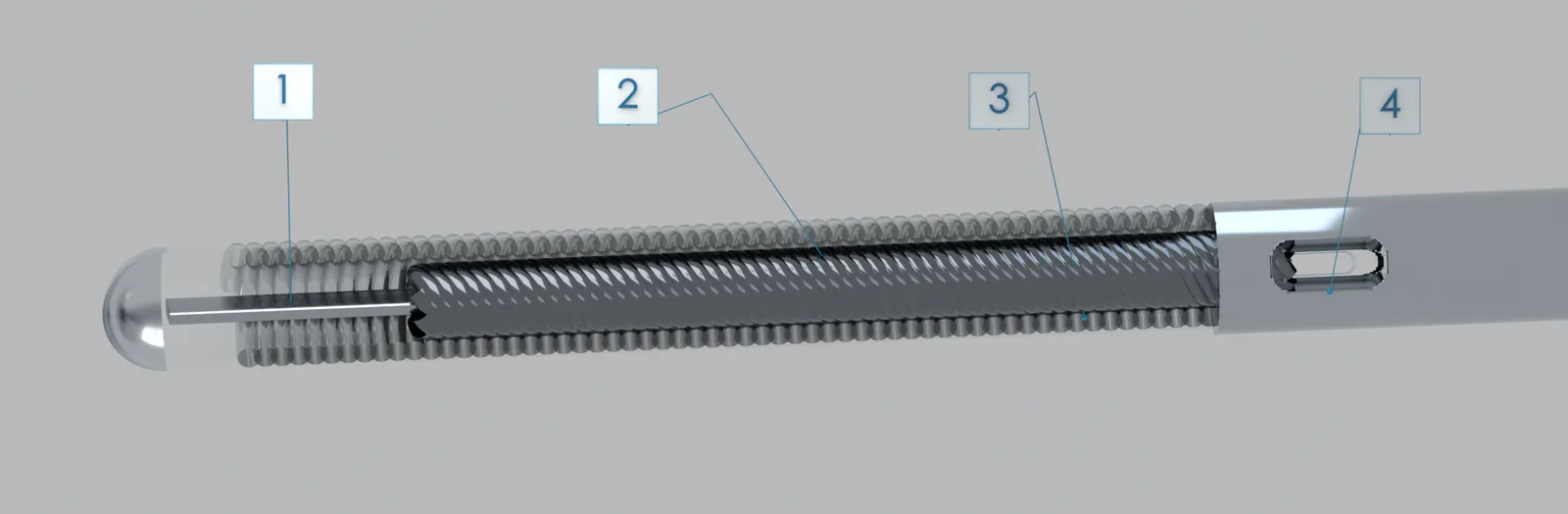
Central element providing distal support and the basis for shaping.
Stranded structure supporting torque transmission and distal stability.
Half-section view showing the relationship between the core, stranded wire, and outer spring.
The through-opening is the sensor observation window; the sensor is positioned 3 cm from the distal end.
Optical Sensing
Sensor Principle and EMC Advantages
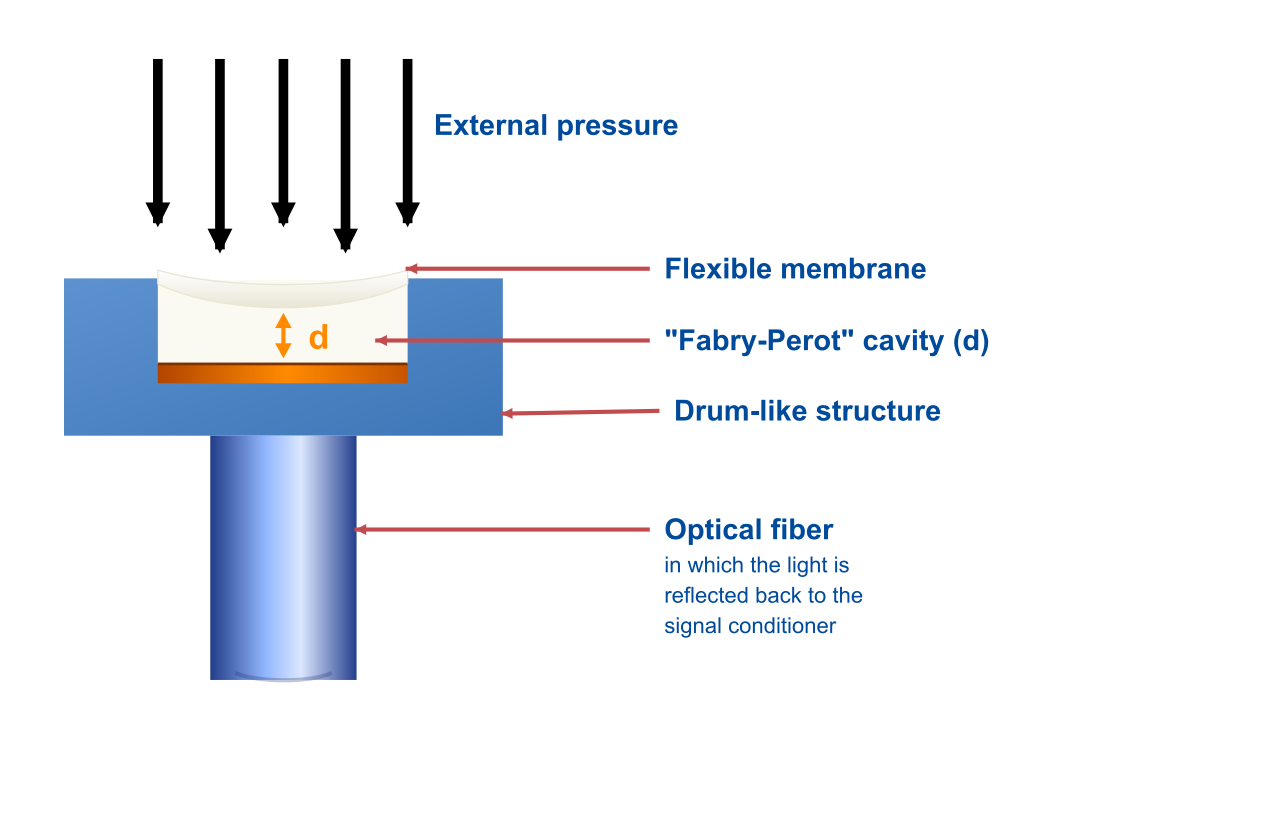
External pressure acts on the pressure membrane and changes the Fabry-Perot cavity length. The reflected optical signal is demodulated into a pressure reading.
Working Advantages
Optical signal transmission is insensitive to electromagnetic interference and supports signal stability in medical electrical environments.
Suitable for integration with the distal structure of a 0.014 in guidewire.
Pressure is captured at the distal end, reducing risks associated with long-distance electrical signal transmission.
Pre-use Information
Pre-use Information
Recommended pre-use checks for external materials, product manuals, and distributor communication.
For distal/proximal pressure relationship measurement and FFR functional assessment.
Check package integrity, sterile status, and shelf life before use.
This product is sterile and single-use only; do not reuse.
Complete connection, pressure equalization, and measurement preparation before use.
Contraindications, warnings, operating steps, and full parameters are subject to the IFU and official product documentation.